
When you are getting a vacation home or rental property ready for the busy season, your to-do list is usually filled with obvious tasks. You are probably organizing deep cleans, double-checking guest linens, updating your listing photos, and making sure the smart locks are working smoothly.
With so many moving parts, it is incredibly easy to overlook a minor issue like a slow drip from the guest bathroom sink or a slightly loose kitchen faucet. After all, a dripping faucet feels like a small, low-priority chore. However, for short-term rentals and vacation homes, these small maintenance oversights have a habit of compounding into much bigger operational headaches.
Let’s take a practical look at how minor leaks actually impact your bottom line, why they are trickier to manage in rental properties, and what you can do to address them before your calendar fills up with guests.
The Math Behind a Slow Leak
It is easy to minimize a slow drip when you don’t live at the property full-time. You might notice it during a quick walkthrough, mindfully resolve to fix it “next time,” and then forget about it once bookings pick up.
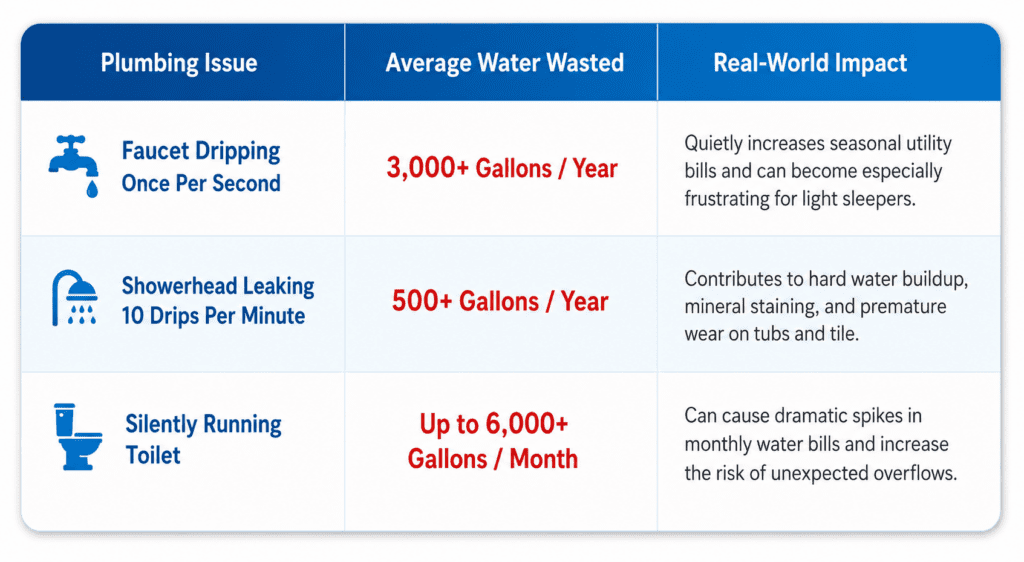
According to data from the Environmental Protection Agency (EPA), a single faucet that leaks at a very standard rate of one drip per second wastes over 3,000 gallons of water over the course of a year. To put that into perspective, that is the equivalent of running more than 180 showers down the drain for absolutely no reason.
We’re often dealing with high utility rates, which means water bills can be a significant line item. When you multiply 3,000 gallons across two or three slightly leaky fixtures in a house, you are looking at an unnecessary, predictable spike in your overhead costs that eats directly into your budget.
Why Rental Leaks Are Harder to Manage
Managing plumbing in a vacation home or investment property comes with a unique set of challenges that traditional homeowners don’t usually have to deal with.
1. The “Not My House” Factor
When guests pay to stay at a property, they are there to relax, not to manage home maintenance. If a faucet requires a little extra muscle to turn all the way off, or if a showerhead has a steady drip after use, most guests won’t bother reporting it. They don’t want their vacation interrupted by a maintenance technician or a property manager stopping by. Because of this, small issues frequently go unreported for weeks or even months at a time.
2. Off-Season Vacancies and Unexpected Damage
Unlike a primary residence where someone is always around to spot a sudden plumbing failure, vacation homes often sit empty for days or weeks during off-peak times. If a worn-out rubber washer finally gives way while the property is unoccupied, a slow drip can graduate into a steady stream. Over a week of vacancy, that steady stream can overflow a clogged drain, ruin cabinetry, buckle flooring, or create a damp environment where mold can start to grow. Fixing that kind of avoidable damage is far more expensive than a proactive plumbing check.
Your Pre-Season Plumbing Maintenance Checklist
With the busy season right around the corner, taking a few hours to run through a quick maintenance check can save you a lot of time, money, and logistics later on. Here is a practical checklist to follow during your next property turnover:
- Do a Thorough Walkthrough: Go to every sink, shower, and tub. Turn the water on completely, let it run for a minute, shut it off normally, and watch it for a full sixty seconds. Look underneath the cabinets with a flashlight to check the P-traps and supply lines for any signs of moisture or slow pooling.
- Test the Toilets for Silent Leaks: Toilets are often the biggest culprits of hidden water waste. Put a few drops of food coloring into the toilet tank and leave it alone for about 15 minutes without flushing. If you see the color bleeding into the toilet bowl, your flapper valve isn’t sealing properly. It’s a five-minute, five-dollar fix that prevents hundreds of gallons of waste.
- Proactively Replace Worn Hardware: If you notice a faucet handle feels loose, catches when you turn it, or requires extra force to shut off completely, go ahead and replace the internal cartridge, O-ring, or washer now.
- Consider Smart Technology: If you manage the property remotely, think about installing affordable, Wi-Fi-enabled smart leak detectors under major sinks and behind toilets. These small sensors send a notification straight to your phone if they detect standing water, giving you an early warning before a leak causes real damage.
- Make It Easy for Guests to Help You: Add a quick, casual note to your welcome book or digital check-in guide. You can say something like: “We love keeping our home well-maintained and eco-friendly. If you happen to notice any dripping faucets or running toilets during your stay, please let us know so we can take care of it during our next cleaning turnover!” This removes any pressure from the guest while keeping you informed.
Keep Things Running Smoothly
Successful property management is all about handling the small details so they don’t turn into big operational problems. A dripping faucet isn’t a disaster on its own, but it is an unnecessary drain on your utility budget and a potential annoyance for your guests.
By spending a little time auditing your plumbing fixtures before your booking calendar fills up, you can protect your profits, keep your utility bills predictable, and ensure your guests have a seamless, comfortable stay.
